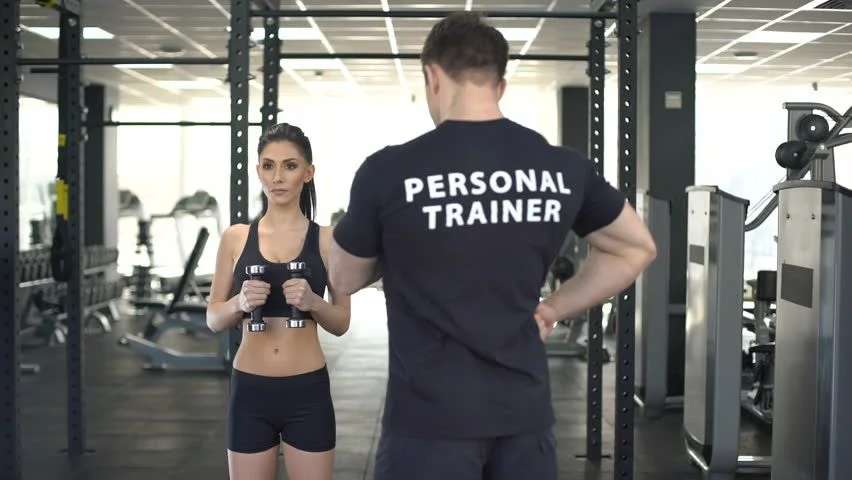
For years, corporate wellness in Singapore followed a predictable pattern. Companies negotiated subsidised gym memberships, offered the occasional lunchtime yoga class, organised a annual health screening, and considered the wellness obligation met. Participation rates were modest, measurable health outcomes were elusive, and the return on investment remained largely theoretical. That model is now being replaced at a meaningful pace by a fundamentally different approach — one that treats employee fitness as an individual, outcomes-driven investment rather than a generic benefit line item.
The shift toward personalised fitness coaching as a corporate wellness strategy is not a trend driven by employee demand alone. It is supported by a growing body of workplace health research and validated by the experience of Singapore organisations that have seen measurable improvements in productivity, absenteeism rates, and talent retention after moving away from one-size-fits-all wellness programmes. Connecting employees with a qualified fitness trainer Singapore within a structured corporate wellness framework is one of the most evidence-backed investments a Singapore employer can make in workforce performance.
The Real Cost of an Unhealthy Workforce in Singapore
The Singapore Ministry of Manpower and various public health bodies have consistently documented the economic impact of lifestyle-related illness and physical inactivity in the workforce. Musculoskeletal disorders — primarily lower back pain, neck pain, and shoulder dysfunction directly linked to sedentary work — are among the most frequent causes of medical leave in Singapore’s office sector. Cardiovascular disease, metabolic syndrome, and type 2 diabetes, all of which have strong associations with physical inactivity and poor body composition, impose substantial costs through healthcare utilisation, reduced cognitive performance, and long-term disability.
Beyond diagnosed conditions, the productivity cost of presenteeism — employees who are physically present but functioning below cognitive and physical capacity due to fatigue, pain, or low energy — is estimated to be several times higher than the cost of absenteeism. A workforce that is chronically under-exercised, poorly recovered, and nutritionally compromised does not perform at its potential, and the gap between actual and potential performance compounds across teams and departments.
Why Generic Wellness Programmes Underperform
The fundamental problem with most corporate wellness programmes is that they offer the same intervention to every employee regardless of their individual fitness level, health status, goals, or lifestyle. A 28-year-old who runs half marathons and a 52-year-old with chronic lower back pain and hypertension are enrolled in the same group fitness class and expected to derive equivalent benefit.
Participation data from Singapore corporate wellness programmes consistently reveals the same pattern: the employees who are already reasonably active engage with gym subsidies and fitness classes, while the employees who most need health intervention — sedentary, overweight, high-stress individuals — rarely participate beyond the initial sign-up. Generic programmes attract the already-healthy and fail to reach those whose health represents the greatest cost and the greatest opportunity for improvement.
Group fitness classes present additional barriers for the specific population that most needs intervention. Public exercise settings are intimidating for individuals who are significantly deconditioned. Group class intensity is not calibrated to individual capacity, creating injury risk for sedentary participants and insufficient stimulus for fitter ones. The absence of individual accountability means that attendance drops as novelty fades.
What Personalised Fitness Coaching Delivers Differently
Personalised fitness coaching through a qualified trainer addresses the core failure modes of generic wellness programmes directly. The process begins with an individual assessment that establishes the employee’s current fitness level, movement quality, health history, stress profile, and specific goals. The programme that follows is designed exclusively for that individual, not adapted from a generic template.
This individualisation has several measurable consequences. Injury risk is substantially reduced because programme design accounts for the individual’s movement restrictions, postural dysfunctions, and physical limitations from the outset. Progression is continuous because the trainer monitors performance across sessions and adjusts load and complexity as the individual improves. Motivation is sustained because the employee is tracking their own personal benchmarks rather than comparing themselves to a class average.
For sedentary, deconditioned employees — the highest-cost health segment in most organisations — the supervised, gradual, individually calibrated nature of personal training is the only wellness intervention that has demonstrated consistent success at improving measurable health markers including blood pressure, fasting glucose, body composition, and functional capacity.
The ROI Case for Corporate Personalised Fitness Investment
Calculating return on investment for corporate wellness requires looking beyond direct healthcare cost reduction to include productivity gains, absenteeism reduction, recruitment and retention value, and risk reduction for workplace injury and chronic disease.
Research from multiple countries with comparable workforce profiles to Singapore consistently shows that well-designed corporate fitness programmes return between two and four dollars for every dollar invested when full productivity benefits are included. The caveat is that this return is realised primarily by programmes with meaningful individual engagement — not by gym subsidy schemes that most employees do not use.
Specific measurable outcomes from corporate personal training programmes include reductions in sick day frequency of 20 to 30 percent among active participants, improvements in self-reported focus and energy levels, reductions in lower back and neck pain incidence, and improvements in cardiovascular risk markers including blood pressure and resting heart rate.
For HR departments evaluating programme options, the relevant comparison is not personal training cost versus gym membership cost. It is personal training outcomes versus gym membership outcomes. A subsidised gym membership that 70 percent of employees rarely use costs money without producing results. A personalised training programme with structured accountability produces measurable health outcomes for every participant.
How HR Departments Can Structure Corporate Personal Training Partnerships
Several partnership models have been successfully implemented by Singapore companies seeking to offer personal training as a corporate benefit.
The most common structure is a subsidised session package, where the company covers a portion of each employee’s personal training cost up to a defined monthly or annual cap. Employees contribute the remaining portion, which maintains personal financial stake and improves engagement rates compared to fully-subsidised benefits that employees treat as free entitlements.
A second model involves on-site personal training sessions at the workplace, where a trainer comes to the office gym or a nearby facility at defined times and employees book individual sessions within their work schedule. This removes the commute barrier that prevents many employees from attending gym sessions before or after work.
A third approach focuses on specific employee segments — high-value talent, employees at elevated cardiovascular or metabolic risk based on health screening data, or those on extended medical leave for musculoskeletal conditions — and offers intensive personalised training support as a targeted health intervention for these groups.
Whichever model is chosen, the measurable outcomes should be defined at the outset. Agreement on what health markers will be tracked, how frequently progress will be assessed, and what participation rates constitute programme success allows HR teams to evaluate programme performance objectively rather than relying on employee satisfaction surveys alone.
What Employees Actually Want from Workplace Fitness Benefits
Employee preferences in corporate fitness benefits have shifted significantly over the past decade. The option of a subsidised gym membership, while still valued, is no longer sufficient to differentiate an employer’s wellness offering in Singapore’s competitive talent market. Employees increasingly expect flexibility, personalisation, and measurable outcomes from employer-funded health benefits.
Surveys of Singapore office workers consistently identify time efficiency as the primary barrier to regular exercise. Employees do not lack motivation to be healthier. They lack confidence that their available time will produce results without professional guidance. This is where personal training addresses a specific psychological barrier that generic gym access does not. When an employee knows that every session is designed specifically for their goals and supervised by an expert, the perceived value of each hour invested increases substantially.
TFX Singapore provides corporate wellness partnerships through its personal training programmes at multiple locations across Singapore, offering structured, science-based training that can be integrated into employee wellness packages. For HR teams looking to move from a passive wellness benefit to an active health investment, this represents a meaningful step toward programmes that produce outcomes rather than just participation numbers.
FAQ
Q: Can Singapore companies claim tax deductions for employee fitness programmes?
A: In Singapore, staff welfare expenses including gym memberships and fitness-related benefits are generally deductible as business expenses under the Income Tax Act, subject to the condition that they are incurred wholly and exclusively for the purposes of producing income and are not of a capital nature. The specific deductibility of personal training costs as a corporate expense depends on how the benefit is structured and documented. Employers should consult with a tax advisor to ensure that the benefit structure meets IRAS requirements for deductibility. The cost treatment also has CPF and benefits-in-kind implications that should be assessed.
Q: How do we measure whether a corporate fitness programme is actually working?
A: The most meaningful metrics combine health outcomes and business outcomes. Health outcome metrics include changes in BMI, blood pressure, resting heart rate, and self-reported energy and pain levels measured through periodic health screenings. Business outcome metrics include medical leave frequency and duration among programme participants versus non-participants, self-reported productivity scores, and where available, performance review data. Participation rates and satisfaction scores are useful leading indicators but should not be the primary success metrics. Programmes with high satisfaction but no measurable health improvement are not delivering value.
Q: What is a reasonable budget for a corporate personal training benefit in Singapore?
A: Budget requirements vary significantly based on the programme structure chosen. A subsidised personal training package for employees typically involves the company covering 50 to 70 percent of session costs, with employees contributing the remainder. For a programme offering four to eight subsidised sessions per month per participating employee, corporate costs typically range from $100 to $300 per participating employee per month depending on session frequency and trainer qualification level. The relevant comparison is cost per measurable health outcome, not cost per session, when evaluating programme value.
Q: How do we encourage sedentary employees to participate in personal training if they are intimidated by the gym environment?
A: The one-on-one nature of personal training is actually significantly less intimidating for sedentary employees than group fitness classes. A private session with a trainer who begins with a simple movement assessment and builds an appropriately low-intensity initial programme removes the public performance anxiety of group settings. Starting employees with introductory sessions framed around movement quality and wellbeing rather than performance or body composition goals reduces psychological barriers. Manager participation and visible endorsement from leadership also meaningfully increases uptake among hesitant employees.