
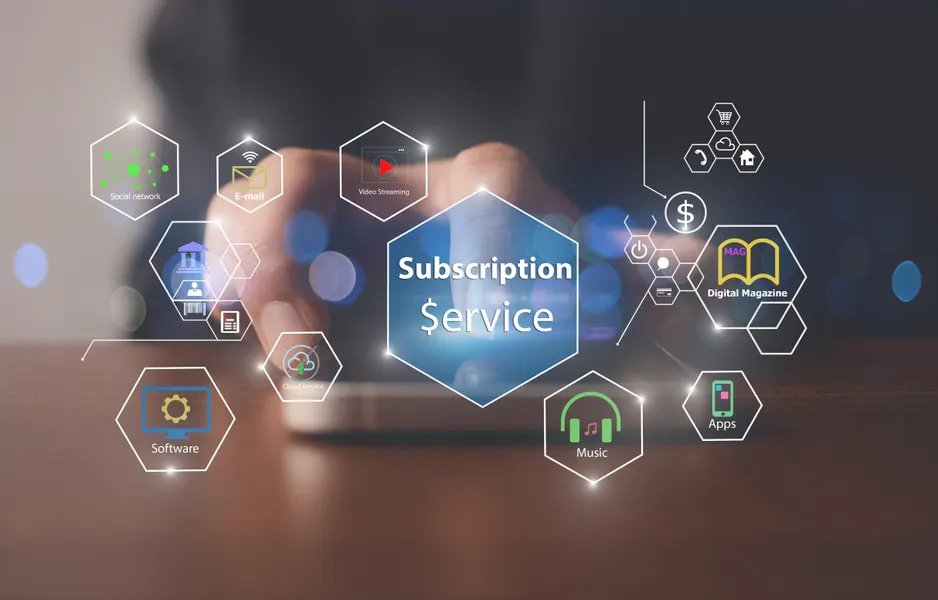
The traditional e-commerce landscape was built on a transactional foundation: a customer feels a need, browses an online store, makes a one-time purchase, and exits the funnel. The business must then spend money all over again to draw that same customer back for a subsequent transaction. This linear commerce model is increasingly giving way to a more predictable, relationship-driven framework: the subscription model.
From software-as-a-service platforms and curated physical product boxes to digital media streaming and premium replenishment services, subscriptions are transforming how online businesses operate. This structural pivot alters everything from financial forecasting and valuation metrics to product design, marketing strategies, and customer support operations. By converting one-time buyers into long-term subscribers, digital enterprises are locking in predictable revenue streams while offering consumers unprecedented convenience and personalization.
The Financial Transformation: From Transactions to Predictability
The most profound impact of the subscription economy is the complete restructuring of corporate financial dynamics. In a traditional transactional model, revenue resets to zero at the beginning of every fiscal quarter. Subscription frameworks eliminate this vulnerability by prioritizing recurring financial inflows.
Stability and Valuation Multipliers
Private equity firms and public markets value subscription businesses highly because of the inherent predictability of their revenue streams.
-
Predictable monthly recurring revenue: Having a clear baseline of incoming capital allows executive teams to make confident investments in capital expenditures, research and development, and talent acquisition.
-
Enhanced cash flow management: Subscription businesses collect capital upfront at the start of a billing cycle, which dramatically reduces working capital constraints and optimizes inventory management.
-
Higher corporate valuations: Companies with strong recurring revenue profiles frequently command much higher valuation multiples during funding rounds or acquisitions compared to transactional peers with identical top-line revenue.
Shifting Key Performance Indicators
The transition to a subscription framework requires a complete overhaul of corporate accounting and performance metrics. Traditional metrics like average order value are replaced by long-term relationship health tracking.
-
Customer retention and churn rate: Churn rate measures the percentage of subscribers who cancel their plans within a given timeframe. Minimizing this metric is the primary driver of subscription profitability.
-
Customer acquisition cost to lifetime value ratio: A healthy subscription business model typically aims for a lifetime value that is at least three times greater than the cost required to acquire that customer.
-
Monthly and annual recurring revenue: These metrics serve as the primary operational compass, replacing erratic daily or weekly sales volume charts.
Operational Mechanics and the Supply Chain Shift
Implementing a recurring revenue model changes how an online business manages its internal operations, software engineering, and physical logistics networks.
Continuous Value Delivery in Digital Products
For software and digital media companies, the subscription model eliminates the concept of the major software release cycle. Instead of launching a massive upgrade every few years, developers engage in continuous deployment.
-
Agile product iterations: Engineering teams release micro-updates, bug fixes, and feature enhancements weekly or daily, ensuring the product continuously adapts to user needs.
-
Reduced software piracy: Cloud-hosted, subscription-bound software is inherently more secure, drastically reducing unauthorized distribution and ensuring all users run the most secure, up-to-date version.
Predictive Logistics for Physical Subscriptions
For e-commerce brands offering physical subscription boxes or automated replenishment services, the model unlocks unprecedented supply chain efficiencies.
-
Inventory optimization: Because shipping volumes are known weeks in advance, companies can order exact quantities from manufacturers, virtually eliminating warehousing dead stock and reducing carrying costs.
-
Streamlined fulfillment schedules: Warehouse operations can be optimized by batch-processing identical subscription orders during predictable monthly windows, lowering variable labor overhead.
Redefining Customer Acquisition and Retention Strategies
Marketing a subscription service requires an entirely different psychological approach than marketing a single product. The goal shifts from convincing a customer to buy once to convincing them to enter an ongoing relationship.
Lowering Barriers to Entry
Because a subscription represents a long-term financial commitment, consumers often experience higher initial friction during checkout. Successful online businesses deploy strategic onboarding tactics to mitigate this hesitation.
-
Freemium tier structures: Offering a baseline version of a digital service for free allows users to embed the tool into their daily workflows before upgrading to a paid tier for advanced features.
-
Frictionless trial periods: Providing a time-bound trial period gives consumers a risk-free environment to assess the utility and quality of the offering.
-
Tiered pricing options: Structuring plans to cater separately to casual users, professionals, and enterprise corporations ensures the business captures the widest possible market share.
Proactive Retention and Engagement
In a subscription ecosystem, the sale is never truly finished. The customer support and account management teams must actively work to keep subscribers engaged and satisfied throughout their entire lifecycle.
-
Behavioral trigger campaigns: If data indicates a subscriber has not logged into a software platform or opened an educational app for two weeks, automated systems can trigger targeted email sequences highlighting useful features.
-
Personalization engines: Utilizing machine learning algorithms to recommend content, products, or replenishment intervals based on historical usage keeps the experience fresh and deeply aligned with individual preferences.
Overcoming Critical Subscription Pitfalls
While the benefits of recurring revenue are clear, managing a subscription model exposes a business to unique operational risks that can quickly degrade profit margins if left unaddressed.
Combatting Subscription Fatigue
As more industries adopt subscription frameworks, consumers face an increasing burden of recurring monthly charges. This has led to a market phenomenon known as subscription fatigue.
-
Frictionless cancellation policies: Making it intentionally difficult for customers to cancel their subscriptions creates resentment and leads to costly chargeback disputes. Offering a clear, simple cancellation pathway preserves brand trust and leaves the door open for future re-activation.
-
Flexible pause options: Allowing users to temporarily pause their shipments or access during vacations or financial contractions prevents total subscriber churn and maintains the customer relationship.
Managing Involuntary Churn
A substantial portion of total subscriber loss is completely involuntary, occurring due to administrative issues rather than a deliberate decision by the consumer to cancel the service.
-
Automated dunning systems: Implement intelligent billing software that automatically retries failed credit card transactions at optimized intervals and sends courteous reminders before suspending account access.
-
Proactive card updates: Integrate platform tools that securely communicate with major credit card networks to automatically update expiration dates and account numbers for saved payment methods.
Frequently Asked Questions
What is subscription fatigue, and how can an online business actively prevent it?
Subscription fatigue is the consumer exhaustion resulting from managing too many recurring monthly fees and accounts. Online businesses can combat this by introducing hybrid models that combine subscription access with one-time purchase options, bundle their services with complementary non-competing brands, and clearly demonstrate unique, ongoing value that justifies a recurring line item in a consumer’s budget.
Is the subscription model viable for small e-commerce businesses with limited capital?
Yes, the model is highly viable because modern e-commerce platforms offer plug-and-play subscription applications that require minimal technical development. Small businesses can leverage these tools to offer subscription-based curation or automated product replenishment, giving them access to stable revenue streams that help them scale without massive upfront infrastructure investments.
What is the specific difference between voluntary and involuntary customer churn?
Voluntary churn occurs when a subscriber makes a conscious, deliberate decision to cancel their service due to dissatisfaction, financial constraints, or a perceived lack of ongoing value. Involuntary churn happens when a subscription is terminated due to technical payment failures, such as expired credit cards, network routing errors, or insufficient funds, without the user’s explicit intent to leave.
How do subscription-based models handle sales tax and global regulatory compliance?
Subscription businesses face complex compliance requirements because recurring transactions must adapt to shifting global tax laws, local currencies, and varying consumer protection standards. Digital enterprises navigate this by integrating merchant-of-record software solutions that automatically calculate localized sales taxes, manage regional compliance mandates, and securely process international recurring payments.
Why do some software companies experience fierce customer backlash when transitioning to a subscription model?
Backlash usually occurs when long-time users feel that a product they previously owned via a perpetual license has been locked behind a recurring paywall without a corresponding increase in actual value. To smooth this transition, companies should offer legacy users significant initial discounts, maintain transparent communication about why continuous funding is required for ongoing development, and introduce substantial new features that justify the recurring fee.
How can a business accurately calculate customer lifetime value in the early stages of launching a subscription?
When historical data is limited, early-stage businesses can estimate lifetime value by looking at verified industry benchmarks for similar product categories. As initial data accumulates over the first few quarters, management can calculate a truer figure by dividing the average revenue per user by the observed customer churn rate, adjusting the model continuously as the customer base matures.
Should an online subscription business invest more heavily in acquisition marketing or retention marketing?
While initial acquisition is mandatory to establish a baseline customer base, long-term profitability in a subscription model depends almost entirely on customer retention. Because the true financial return on a subscriber is realized only after they remain past the point of offsetting their initial acquisition cost, mature businesses should shift the majority of their focus and resources toward retention marketing, product updates, and customer success initiatives.